Thinking about a doorless walk-in shower? Here are the real pros and cons, from open-concept style to water control, before you commit to the look.
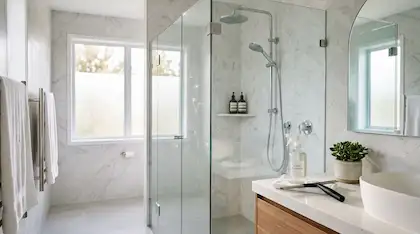
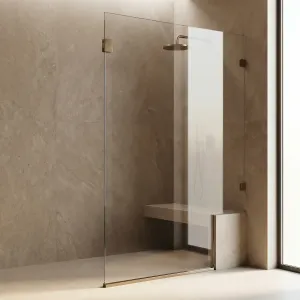
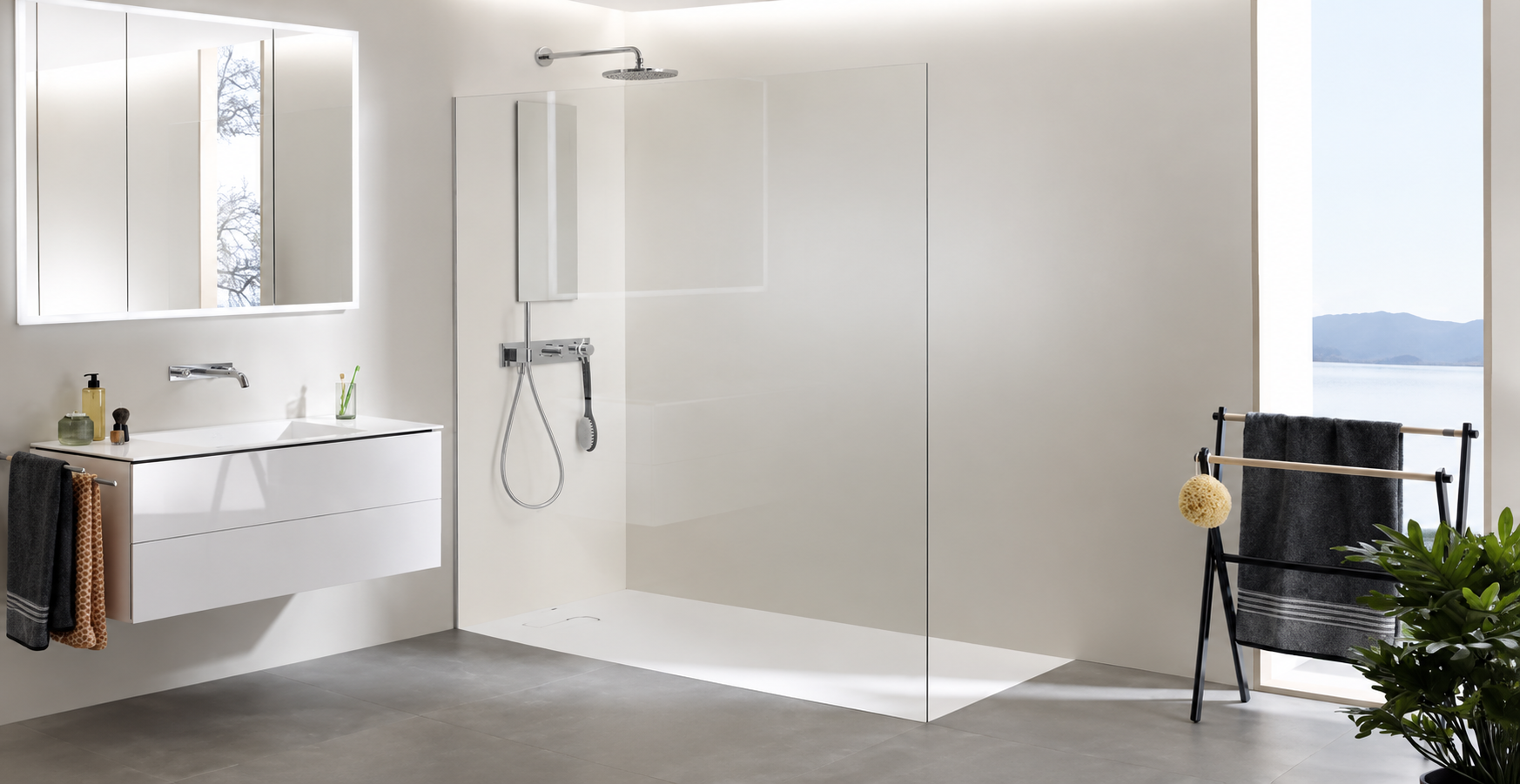
A doorless walk-in shower is one fixed panel of glass with an open walkway beside it, no door at all. It is one of the most requested looks in new bathroom builds right now, and it is also one of the most misunderstood. Homeowners see the open, hotel-spa photos online and assume it is simply the fixed panel style of shower door. It is really a different decision, with its own list of trade-offs that a standard enclosure does not have.
Before you commit to going doorless, it helps to separate what this layout genuinely does well from what it asks you to manage in exchange
A doorless shower wins on openness, easy entry, and low maintenance. It loses on water control and warmth unless the layout is built around it from the start. It is the right call for a larger bathroom designed with this shower in mind, and the wrong call for retrofitting a small, standard stall.
What a Doorless Walk-In Actually Is
A doorless walk-in uses one or two stationary glass panels to screen the shower area without ever fully enclosing it. There is a wide gap for walking in, no hinge, no track, and no seal to maintain. The showerhead, the slope of the floor, and the placement of the glass are what keep water inside, not a door.
That last part is the key difference from every other configuration. A hinged door, a sliding door, even a corner enclosure, all rely on glass meeting glass or glass meeting a wall to contain water. A doorless shower relies on geometry and plumbing placement instead, which means the layout has to be right before the glass goes in, not after.
Pro: The Most Open Feel of Any Shower Configuration
Nothing else on the market makes a bathroom feel bigger. With no door swinging into the room and no frame breaking up the sightline, the shower reads as part of the bathroom instead of a separate box inside it. In a primary suite built around a spa feel, this is usually the single biggest reason homeowners choose it.
Pro: The Easiest Entry of Any Shower
There is no step over a threshold, no door to pull open with wet hands, and no narrow gap to squeeze through. That makes a doorless shower the most accessible configuration we build, which is part of why it shows up so often in aging-in-place and universal design projects, not just high-end spa bathrooms.
Pro: The Lowest Maintenance of Any Configuration
No door means no hinge to collect residue and no track to scrub. The entire cleaning routine comes down to squeegeeing one or two flat panels, with no seams or corners where grime hides. It is the fastest shower in the house to keep looking new.
Con: Water Control Takes Real Planning
This is the trade-off that catches people off guard. Without a door, water stays inside the shower only if the showerhead is positioned correctly, the glass panel is sized and placed to block the spray path, and the floor slopes toward the drain the whole way across the opening. Get any one of those wrong and water ends up on the bathroom floor.
This is not something you can fix after installation. It has to be designed into the plumbing rough-in and the panel placement from the start, which means a doorless shower is a much bigger decision during a renovation than simply picking a different door style for an existing stall.
Con: It Needs More Floor Space Than a Standard Enclosure
A doorless shower needs a wider footprint than an enclosed one, both for the open entry and for enough distance between the showerhead and the opening to keep spray contained. In a small or standard-sized bathroom, there usually is not enough room to do this well, which is why doorless walk-ins show up mostly in larger primary bathrooms rather than guest baths or secondary bathrooms.
Con: Less Warmth and Steam Retention
An enclosed shower holds heat and steam inside the glass, which is part of what makes a hot shower feel like a hot shower. A doorless layout is open to the room by design, so heat and steam escape more easily. In a cold climate or a bathroom without strong ventilation and heating, this is a real comfort trade-off, not just a theoretical one.
Who This Layout Is Actually Right For
A doorless walk-in is the right call when you have the floor space to spare, you are planning the plumbing from scratch rather than retrofitting an existing stall, and an open, minimal look matters more to you than maximum heat retention. It is also a strong choice for anyone prioritizing easy entry, whether that is for accessibility now or planning ahead for it later.
It is the wrong call for a small or standard bathroom, for a secondary or guest bath where upfront design control is limited, or for anyone in a cold climate who wants their shower to trap heat.
How It Compares to a Fixed Panel With a Door
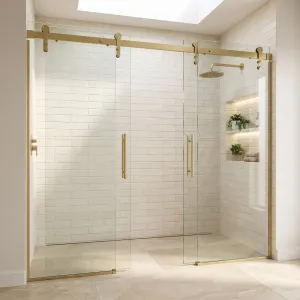
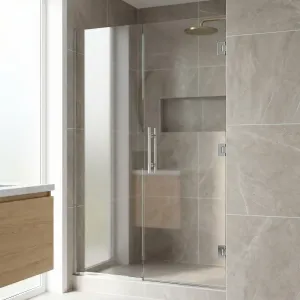
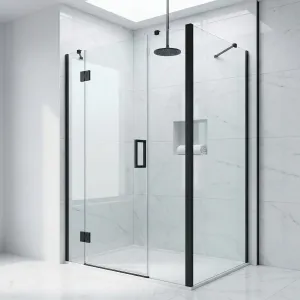
A fixed panel paired with a door shares the same open, minimal glass look but keeps water contained through the door itself rather than through layout and plumbing alone. It is the easier retrofit of the two, since it does not require redesigning the shower’s footprint or floor slope.
We cover how a fixed panel configuration compares to hinged, sliding, pivot, and neo-angle doors in our full guide to shower door styles.
Making the Decision
Start with your bathroom’s size and layout, since that determines whether going doorless is even physically realistic. Then be honest about your climate and how much you value a hot, steamy shower, since that is the trade-off most people underestimate going in. If both line up, a doorless walk-in delivers a look and an ease of use that no other configuration matches.