Hinged, sliding, pivot, neo-angle or fixed panel? Compare 5 custom shower door styles by space, cost, and cleaning to find your best fit.
Most homeowners start a shower project by picking glass and hardware finishes. That is a reasonable place to start, but the door style should come first. A door that swings into a vanity is a daily annoyance no matter how beautiful the glass is. A track that traps soap scum is a chore you sign up for every week.
The good news is that custom glass gives you real range. Five door styles cover nearly every bathroom layout, and each one answers the questions of space, access, and upkeep differently.
If you want the cleanest look with the least cleaning, a hinged door is the safe winner. If you are short on clearance, go sliding. If you want the most open, modern feel, a fixed panel is the answer.
Why the Door Style Matters More Than You Think
The door is the part of the enclosure you touch every day. It decides whether you can walk in with a towel in your hand, whether a child or an older family member can step in easily, and whether the bathroom still feels open once the glass is installed.
It also decides what you clean. Every track, seam, and hinge is a place where water sits and minerals collect. Fewer parts usually means less work, but the right answer depends on your layout, not on a rule of thumb.
Option 1: Hinged (Swing) Door
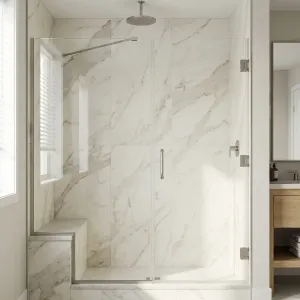
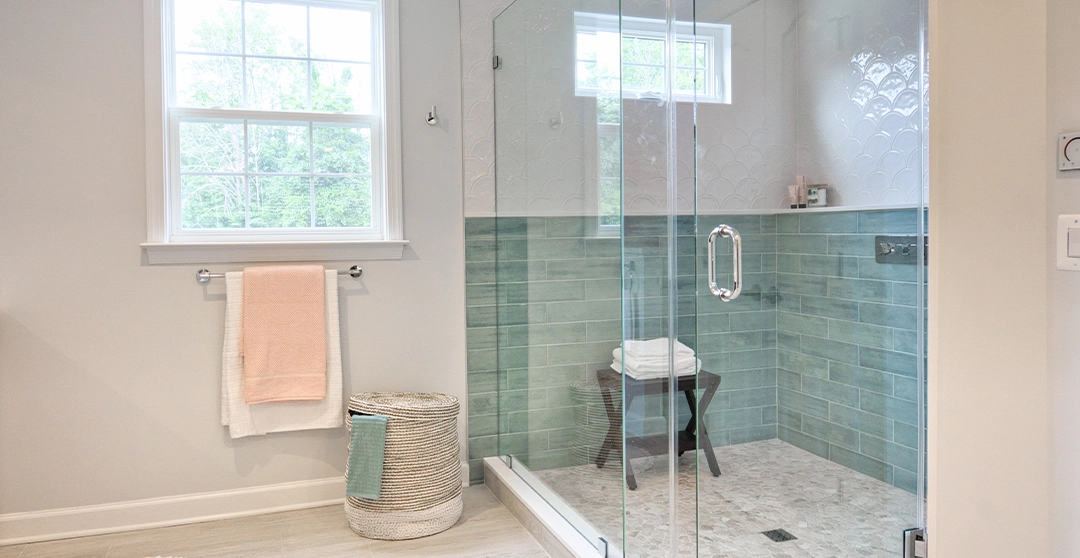
A hinged door works like any other door in your home. It swings on side hinges mounted to the wall or to a fixed panel, and it is the style most people picture when they say frameless shower. It is probably the most requested option we install, and it earns that spot.
Its biggest strength is simplicity. With no bottom track, there is nothing on the floor to trap water, and the glass wipes down in seconds. Hinged doors also look the most seamless, which shows off tile work and keeps small bathrooms feeling open.
The trade-off is clearance. The door needs room to swing, so you must check the path against the vanity, the toilet, and the bathroom door. If the swing is blocked, this is not your style, and no amount of good glass will fix that.
Option 2: Sliding (Bypass) Door
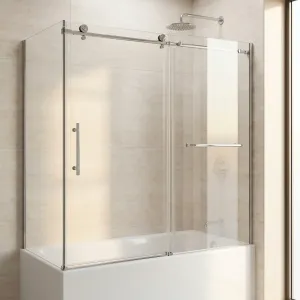
Sliding doors use two panels that pass each other on a track, so nothing swings into the room. That makes them the natural answer for tight bathrooms and for tub and shower combinations where there is no space to spare.
The practical win is that they never collide with anything. You can put a vanity or a toilet right next to the enclosure and the door will not care.
The honest trade-off is upkeep and access. The track collects soap residue and mineral deposits, and if you have hard water you will need to clean it regularly. You also only open about half of the enclosure at a time, which matters if you want to step in easily or clean the shower walls. Sliding doors are a strong pick when space is the problem and a frustrating one when it is not.
Option 3: Pivot Door
A pivot door turns on pins at the top and bottom of the panel instead of hinges on the side. The result looks a little more architectural, and it handles wider and heavier glass panels better than a standard hinge does.
It is a good fit for wide openings and for homeowners who want the door itself to feel like a design decision. Some pivot doors can swing in both directions, which adds flexibility when the room layout is not ideal.
The trade-off is that it still needs swing clearance, and the pivot points are a detail that has to be planned before the glass is made. Pivot doors reward careful measuring and punish guesswork.
Option 4: Neo-Angle Door
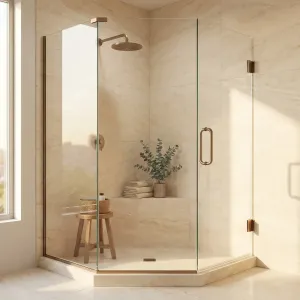
Neo-angle enclosures are built for corners. Two angled panels meet at a diagonal with the door in the middle, so the entry faces into the room instead of sitting flat against one wall. It is the classic solution for a corner shower that would otherwise feel boxed in.
The access is generous. The angled entry is easy to step through, and the shape can make good use of a corner footprint that no other style handles as well.
The downsides are cost and cleaning. There is more glass, more seams, and more hardware than in a simple hinged door, which means a higher price and more surfaces to wipe. It is the right choice for a true corner and the wrong choice for a standard alcove.
Option 5: Fixed Panel (Walk-In)
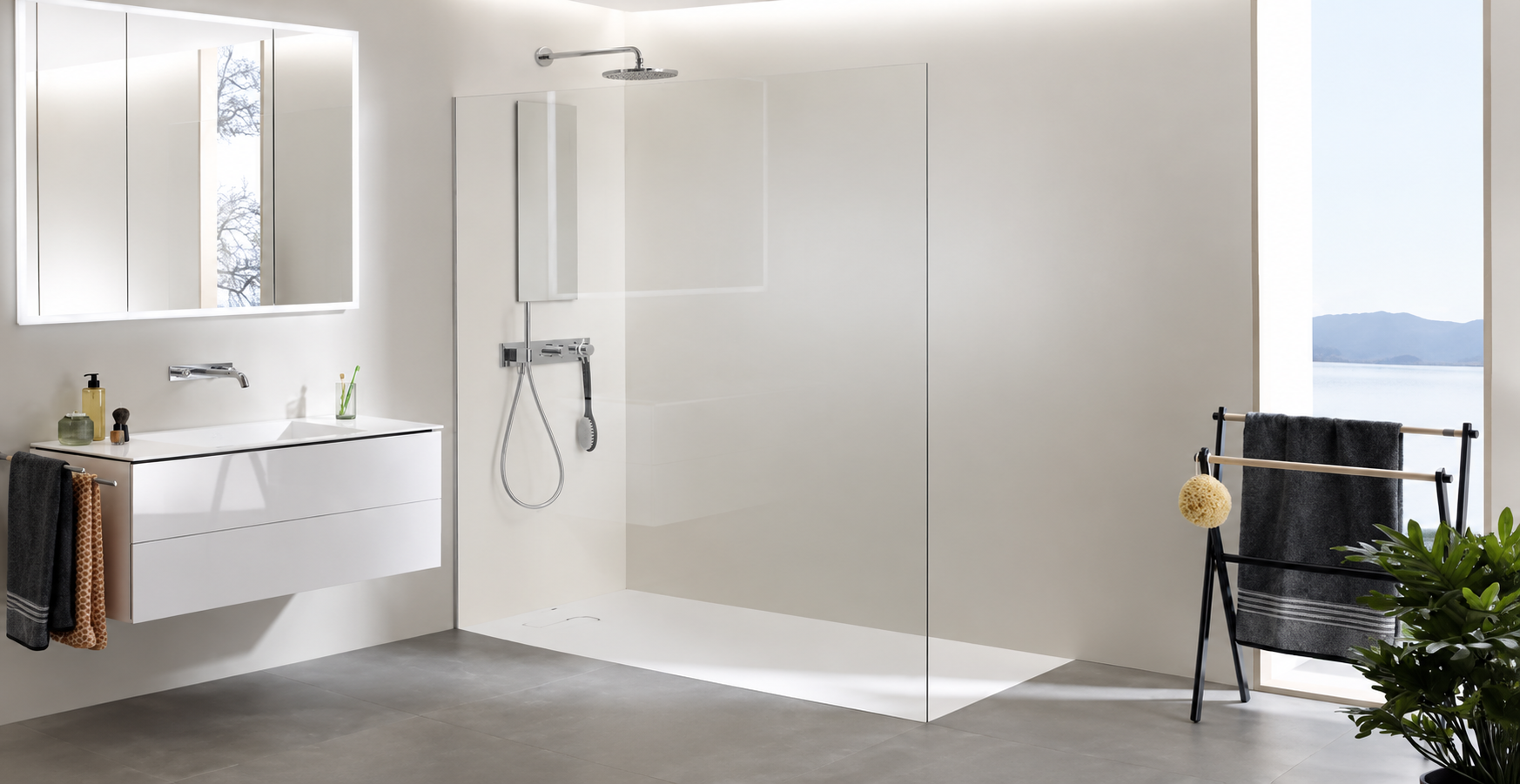
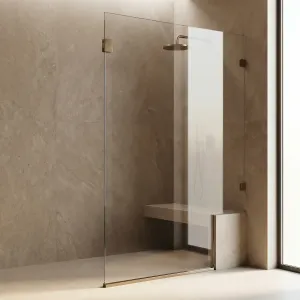
A fixed panel is one stationary sheet of glass with an open walkway beside it. There is no door to swing, slide, or clean around, and the bathroom reads as one continuous space.
This is the most open and minimal option on the list, and it is the easiest to enter. It also has the fewest moving parts, so there is almost nothing to maintain beyond the glass itself.
The trade-off is water control. With no door, the shower needs enough depth and a smart showerhead position so that spray stays inside, and the space can feel cooler because it is not fully enclosed. It works best in larger bathrooms and in layouts designed around it from the start.
Choosing the Right Door for Your Space
Start with clearance. Measure where a door can swing and where it cannot. If a hinged or pivot door would hit something, sliding or a fixed panel is your answer. If you have the room, hinged is usually the easiest path.
Then think about who uses the shower. A guest bath, a kids' bath, and a primary suite have different needs. Easy entry favors fixed panel and neo-angle. Fewer things to clean favors hinged and fixed panel.
Cleaning is the last filter. Hinged and fixed panel are the easiest. Pivot sits in the middle. Neo-angle and sliding demand the most attention, especially with hard water. Be honest about your routine before you commit.
What Even the Right Door Cannot Fix
The right door style will not fix a layout that does not work. If the shower is too narrow to enter comfortably, a different door will not add inches. That problem needs to be solved with the design, not the hardware.
It also will not forgive a bad measurement. Custom glass is cut to your exact opening, and there is very little room for error. If you have not measured yet, do that first, and do it carefully.
Finally, the door style is a long-term commitment. Tempered glass cannot be reshaped after it is made. If you choose a style that does not suit your space, the fix is a full replacement. Factor that into the decision.
The Pick I Would Make Today
If someone handed me a blank check and said choose one for a standard alcove, I would pick a frameless hinged door. It hits the best balance of clean look, easy maintenance, and everyday comfort, and it works in more bathrooms than any other option here.
If I had a tight bathroom or a tub and shower combination, I would go sliding without hesitation. It is the pragmatic choice when clearance is the limit.
And if I were building a large, spa-first bathroom with room to spare, I would choose a fixed panel. The open, minimal feel is hard to beat.
The one style I would pick last is the one that does not match your layout. A beautiful door in the wrong space is still the wrong door. Start with how you live in the room, and the right choice usually becomes obvious.