Bathtub Doors
Bathtub doors are the awkward middle child of shower glass. They have to mount on a short wall, reach across a tub that wasn't designed with glass in mind, and give you enough clearance to actually get in without knocking your shin on the rim. The hardware for it is different from every other category we sell.
What Makes Tub Doors Different
A standard shower door mounts to a curb, which is a flat surface the same height as the tile floor. A bathtub door mounts to the top rail of a bathtub, which is typically higher, narrower, and much less forgiving. The glass has to sit on a header that spans the full width of the tub, and the bottom edge needs a seal that works against the porcelain or acrylic surface of the tub itself.
That's why you can't just order a regular shower door for a tub install. The header profiles, the bottom seals, and the bracket hardware are all tub-specific. We cut and configure them differently from the start.
Sliding vs. Swinging Tub Doors
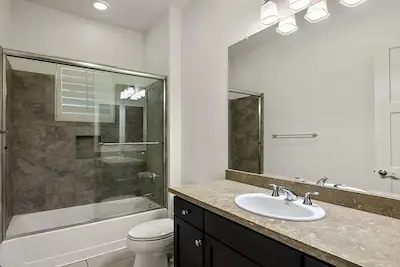
Sliding is the older, more common layout: two panels of glass that bypass each other on a top and bottom track. Opening one side lets you into that half of the tub; opening the other lets you into the other half. This is what you see in most 1990s bathrooms that still have their original glass.
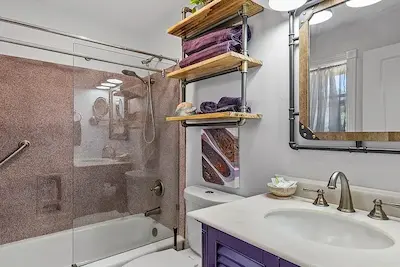
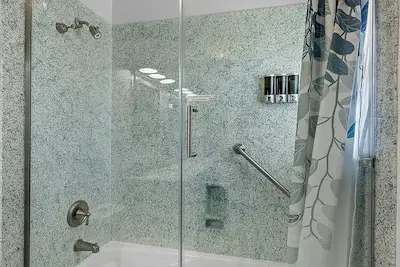
Swinging tub doors are the newer, cleaner option. You get one or two hinged panels mounted on a header that spans the tub rim, and they swing outward the way a regular shower door does. It's a better look and a better shower experience, but it only works if your bathroom has room for the door to swing without hitting a vanity or a toilet.
If your tub is in an alcove with a wall three feet away, swinging works fine. If the alcove is tight or the tub sits right next to a vanity, stick with sliding. Mixing up this decision is the most common regret we hear from homeowners a year after installation.
Dual Sliding, Single Slider, or Double Swing
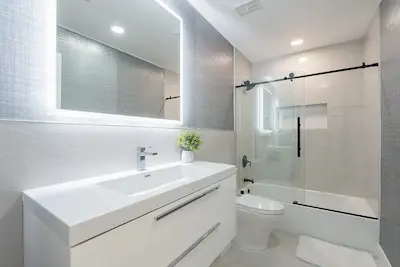
Our sliding tub doors come in two configurations. The dual sliding version gives you two bypass panels that both move along the track, which is the traditional layout and works for any standard-width tub. The single slider pairs one moving panel with one fixed panel — the door slides against the fixed panel and you step in through the opening. Single sliders feel more modern and use fewer tracks, which means less hardware showing.
Double swinging doors are the premium option. You get two hinged panels that both swing out from the middle, effectively doubling your entry opening. It's the right call for bathrooms used by multiple people or for tubs that serve as both a bath and a shower.
Glass Height for Tub Doors
Bathtub doors are almost always shorter than regular shower doors, because they only need to cover the shower-head portion of the tub. A typical tub door runs 58 to 66 inches tall measured from the rim of the tub. That's enough to keep spray off the bathroom floor without creating a giant wall of glass.
If your tub has an unusually high rim (some modern soaking tubs sit 22 inches off the floor or more), factor that into the total height measurement your contractor provides. The glass height is measured from the tub rim up, not from the bathroom floor up.
Seals and Splash Control
Seals matter more on tub doors than they do anywhere else. A shower floor is pitched toward a drain, so small amounts of escaping water just run back in. A bathtub rim is flat, and any water that gets past the seal ends up on the bathroom floor. We ship every tub door with the appropriate bottom seal and side jamb gaskets, but they need to be installed correctly and replaced every few years as they wear out.
That's also why we recommend the glass protection coating on tub doors more often than on regular showers — the coating makes water bead up and run down the glass face instead of clinging to the bottom edge where it can find its way past the seal.
Inspect your shipment before you sign for it. Freight damage must be noted on the delivery receipt at the time of delivery. Look over the crate and the glass while the driver is still there, write any damage on the receipt before you sign, including damage to the packaging, and report it to us within the deadline in our shipping policy. Signing a clean receipt for damaged freight limits what can be claimed.
A few other things to know:
- Your glass is made to measure and built after your order is placed, so there is a production window before it ships. Production time varies with product type, glass thickness, hardware finish, material availability and manufacturing capacity, and estimated times are not guaranteed.
- Because the panels are oversized and fragile, they ship by freight rather than standard parcel. The carrier and service are chosen based on size, weight, destination and availability.
- Shipping cost is calculated at checkout from your destination, order size and weight, freight class, residential or commercial delivery, and any liftgate or limited-access service required.
- Someone must be there to receive it. The carrier contacts you to schedule delivery, so stay reachable and check that your shipping address is correct. Plan on having help available to take in oversized freight; refused deliveries and storage can add carrier fees.
Project Gallery


You May Also Like

Customer Reviews
- Curtain is gone for good
- Matched the tub filler
- Sweep took patience
- Transformed the hall bath


